
Butterfly Haircut with Bangs: 22 Ideas for Every Face Shape
Reviewed by the Butterfly Haircuts team, professional hairstylists
A butterfly haircut with bangs pairs the cut’s short, face-framing front layers with real bangs. It is the most searched version of this cut — and the one that changes your face the most. The bangs do the framing work, so the rest of your hair keeps its length.
But not every kind of bang works with this cut. Pick the wrong type and the whole look fights your face. This guide covers the 22 ideas in seven groups — 90’s, short, wispy, curtain, side, and full bangs — plus what to ask your stylist, how to style them at home, and who should skip bangs entirely.
Key takeaways
- Curtain bangs are the safest first pick — they melt into the layers and grow out easy.
- Wispy bangs suit fine hair. Full bangs suit high foreheads. Side-swept bangs soften square faces.
- The cut keeps your length. Only the front layers and the bangs are short.
- Full bangs need a quick blow-dry every morning. Blended bangs need almost no styling.
What Is a Butterfly Haircut with Bangs?
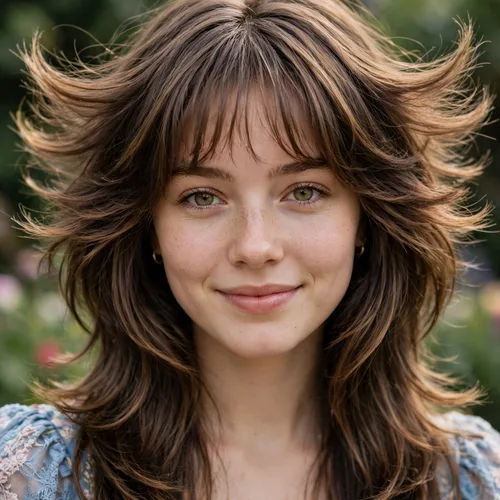
A butterfly haircut with bangs is a layered haircut with short layers around the face, longer layers in the back, and bangs that blend into those front layers. The short front layers fan out like butterfly wings — that is where the name comes from. The bangs are not a separate fringe sitting on top. They melt into the layers, so the whole front of the cut moves as one piece.
A plain butterfly haircut has no true bangs — the shortest front layer usually starts at the cheekbones. Adding bangs makes that front layer shorter and more defined. You get more framing, more volume at the top, and a stronger shape around the eyes and cheeks. The back of the hair stays long, so you do not lose length.
Which bangs fit your face? Use this quick guide before you pick an idea below.
- Round face: long curtain bangs, parted in the middle. They make the face look slimmer.
- Oval face: almost any bang works. Full butterfly bangs look best.
- Square face: side-swept bangs. They soften a strong jawline.
- Heart face: curtain or wispy bangs. They add width around the cheeks.
- Long face: full bangs or wispy bangs. They make the forehead look shorter.
- High forehead: full butterfly bangs are the best fix.
Five kinds of bangs work with this cut. Every idea in this guide uses one of them.
1. Wispy bangs — thin, light, a little see-through. Best for fine or thin hair. They keep the top light instead of heavy.
2. Curtain bangs — split in the middle, longer at the sides. The safest pick. They blend into the butterfly layers like they were always there.
3. Side-swept bangs — swept to one side. Great for square faces and cowlicks. They hide a wide hairline well.
4. Full butterfly bangs — thicker fringe that starts high and melts into the layers. Best for high foreheads. Needs the most styling.
5. Long blended bangs — barely bangs at all. They start at the cheekbones and flow into the cut. The lowest-maintenance option.
22 Butterfly Haircut with Bangs Ideas
Here are 22 looks in seven groups, sorted by the bang types people search for most. Start with the group that matches your bang type, then pick the idea that fits your face and your hair.
1. 90’s Butterfly Bangs
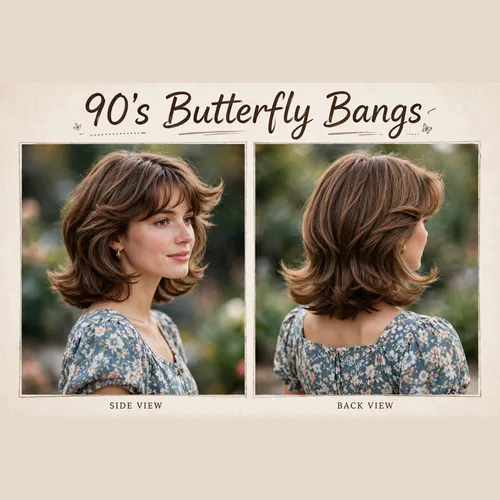
The 90’s made this cut famous — feathered bangs, flipped ends, and lots of movement. This is the most searched bangs look after the main cut itself.
Soft feathered bangs that flip out at the ends. Ask your stylist to start them at the cheekbones. Best on oval and heart faces.
2. Short Butterfly Haircut with Bangs
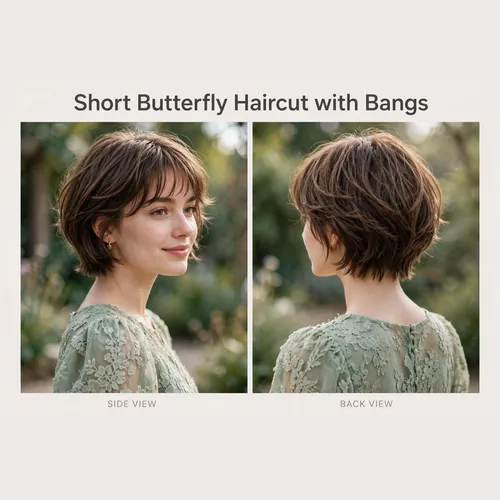
Short hair makes bangs easy — the layers stay light and the bangs do all the framing.
Short layers plus bangs is the easiest version of this cut. Best for fine hair and round faces, because the short length adds volume on top.
3. Light Wispy Bangs on Fine Hair
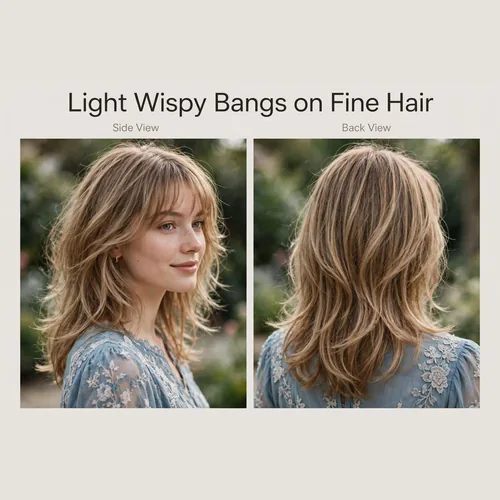
Wispy bangs are light and soft. This group works best on fine hair and long faces, where heavy bangs would fall flat.
Fine hair goes flat under heavy bangs. Wispy bangs stay light and let the layers below show through.
4. Wispy Bangs for a Long Face
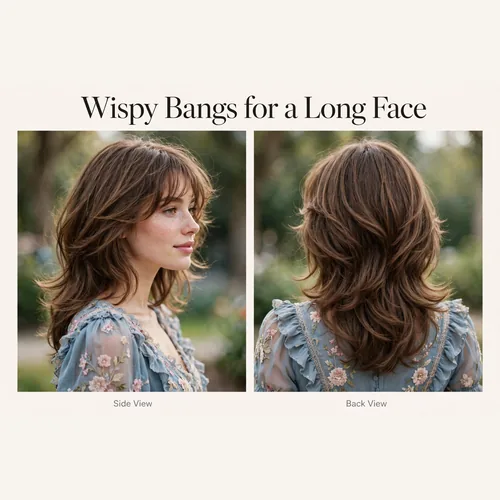
A long face needs width, not length. This look adds that width right at the forehead.
Wispy bangs break up the forehead without adding weight. Your face looks shorter and more balanced.
5. Textured Wispy Bangs
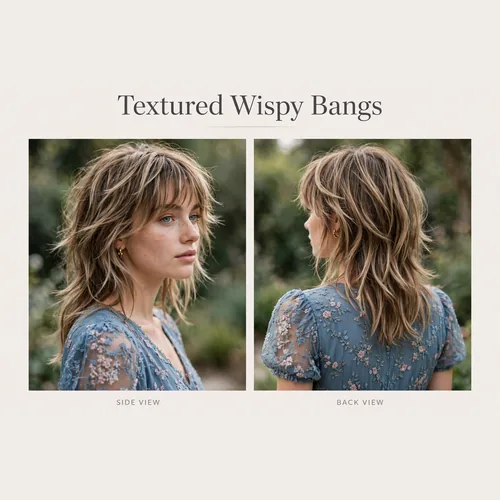
Plain wispy bangs can look too soft for some people. Texture fixes that.
Choppy ends make wispy bangs look modern, not babyish. Works best with wavy or straight hair.
6. Wispy Bangs with a Low Bun
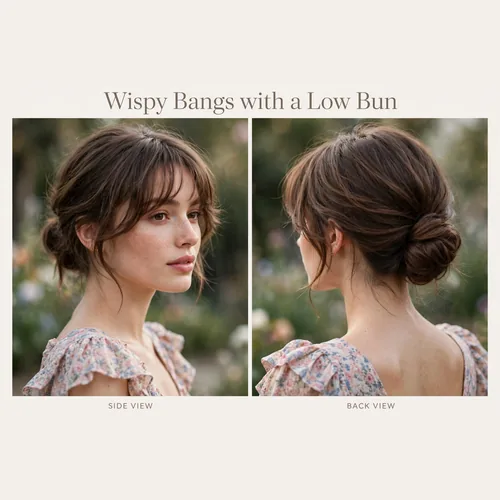
Bangs do not have to mean wearing your hair down every day. This idea proves it.
Tie the layers back and the wispy bangs still frame your face. A five-minute style for busy mornings.
7. Classic Middle-Part Curtain Bangs
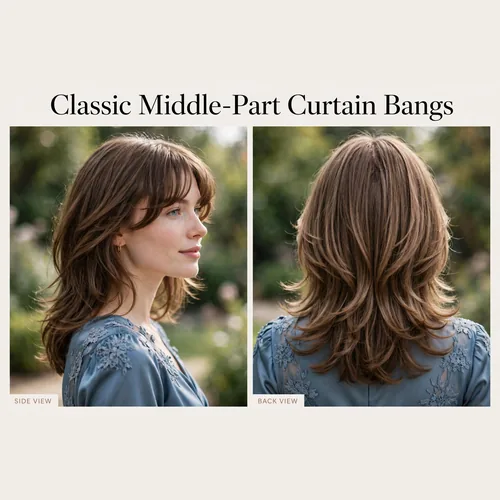
Curtain bangs are the easiest place to start. They part in the middle and blend into the layers, so they suit most faces.
The look everyone pins. Bangs start at the nose, split in the middle, and curve into the butterfly layers. Works on round, oval, and heart faces.
8. Long Cheekbone Curtain Bangs
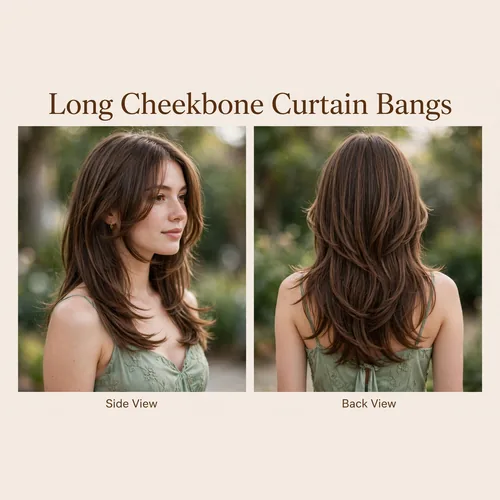
Not ready for short bangs? This is the gentle first step into curtain bangs.
Bangs start at the cheekbones and stretch past the chin. Best for round faces — the long lines make the face look slimmer.
9. Curtain Bangs with Loose Waves
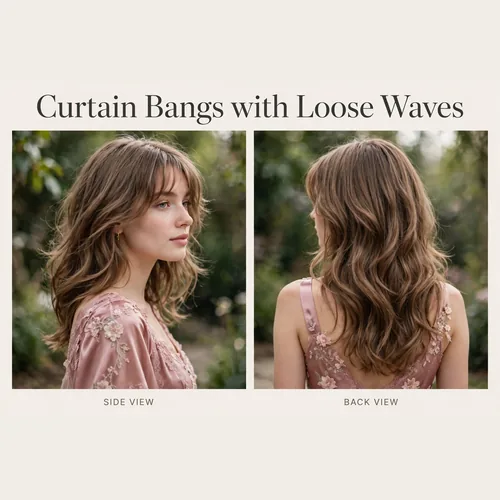
Straight curtain bangs can look thin. Waves fix that in minutes.
Add waves to the whole cut and the bangs look thicker. A curling iron on low heat does the job in ten minutes.
10. Short Chin-Length Curtain Bangs
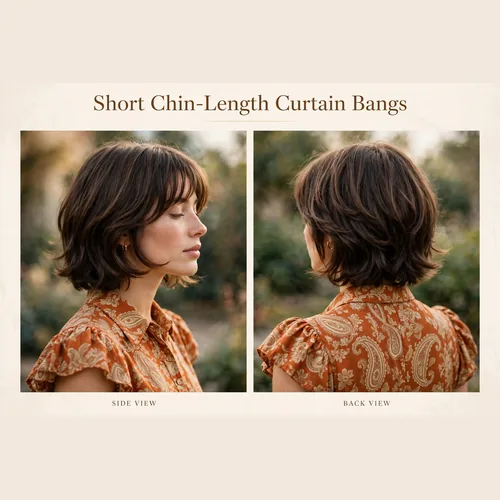
This is the bold end of the curtain family — shorter, with a retro feel.
Bangs end at the chin for a bolder, 70s-style look. Best on oval and heart faces. Round faces should skip this one.
11. Curtain Bangs on Thick Hair
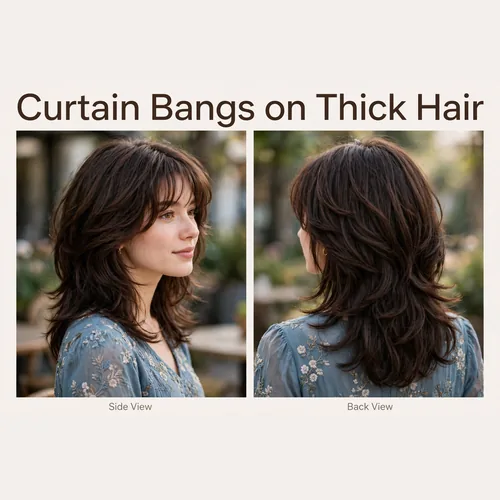
Thick hair does not rule out curtain bangs. It just changes how they must be cut.
Thick hair can make bangs look heavy. Ask your stylist to thin the bangs so they fall soft instead of sitting like a shelf.
12. Deep Side Part with Swept Bangs
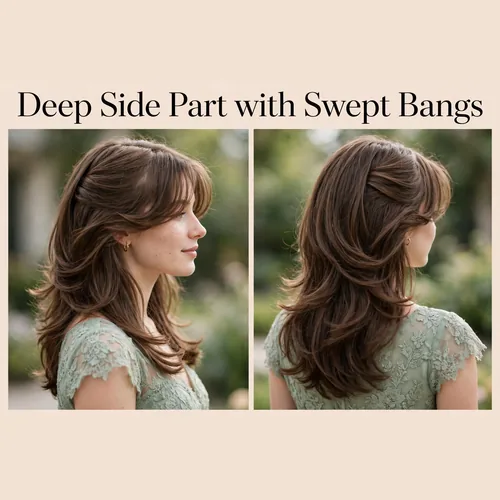
Side-swept bangs move the hair to one side. They soften a strong jaw and hide a wide hairline or a cowlick.
A deep part moves hair away from a wide forehead. Good for square faces and for hiding cowlicks.
13. Soft Side Bangs on a Square Face
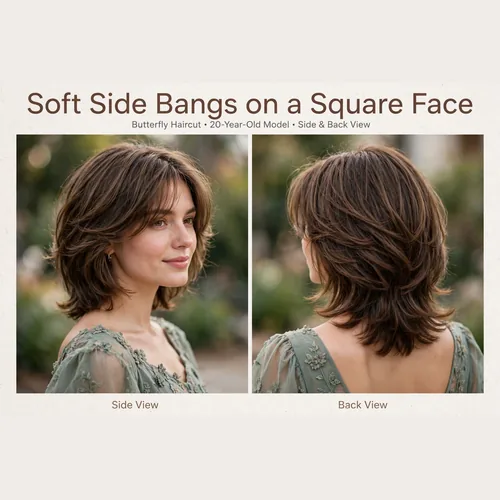
A square face needs soft lines, not sharp ones. Side bangs give you exactly that.
A strong jaw needs soft lines above it. Side-swept bangs break up the width of the face.
14. Side Bangs with Curls
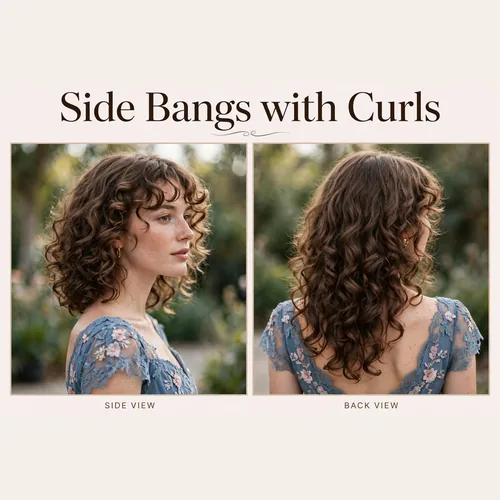
Curly hair and bangs can work together — if the bangs are cut for curl, not against it.
Curly side bangs blend into curly butterfly layers with no hard line. Let them air-dry for a natural look.
15. Grown-Out Side Bangs
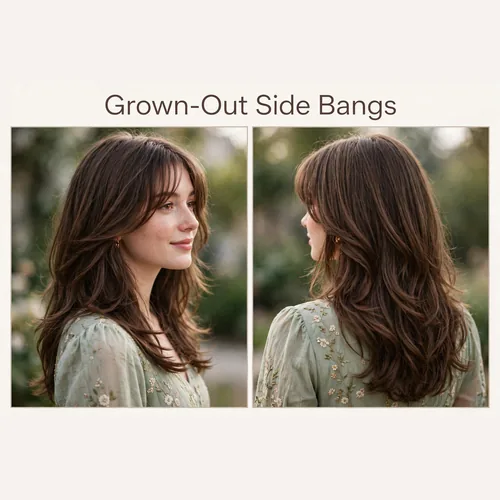
Already growing out a fringe? This is where it lands — and it looks on purpose.
Letting side bangs grow past the chin turns them into face-framing layers. The easiest bang grow-out there is.
16. Full Fringe with Long Layers
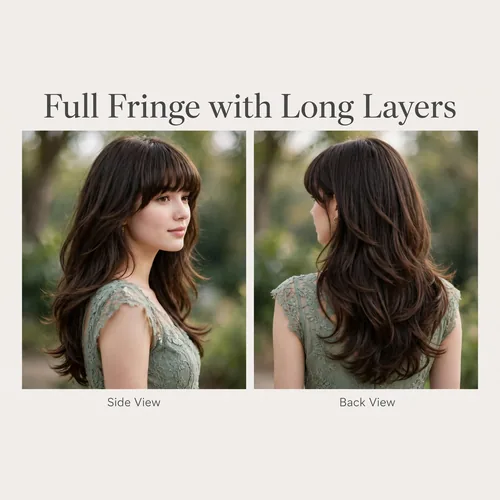
Full bangs make the boldest change. They cover the forehead and need the most styling, but they frame the face fast.
A thick fringe plus long butterfly layers is the boldest version of this look. Best on high foreheads and oval faces.
17. Rounded Full Bangs
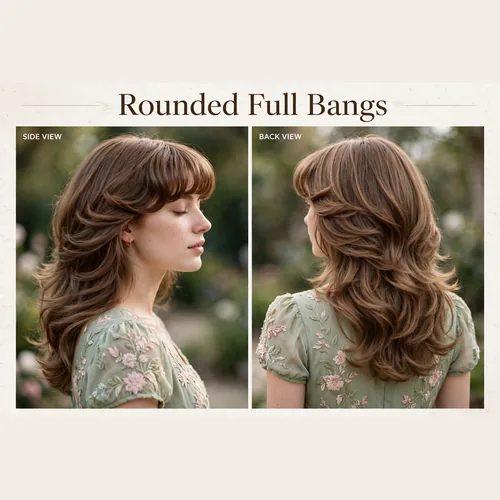
A straight-across fringe can look harsh. Rounding the corners softens the whole face.
Bangs cut slightly longer at the sides curve around the face. Softer than a straight-across cut.
18. Full Bangs on a High Forehead
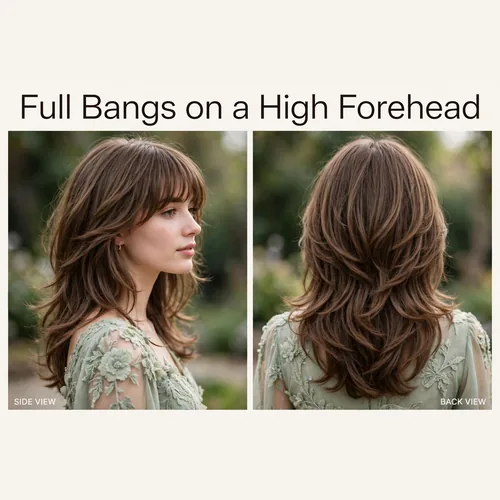
If your forehead is the part you always hide, this is the idea built for you.
Full bangs do the job best. They cover the forehead in one clean line — and they hide fine lines too.
19. Feathered Full Bangs
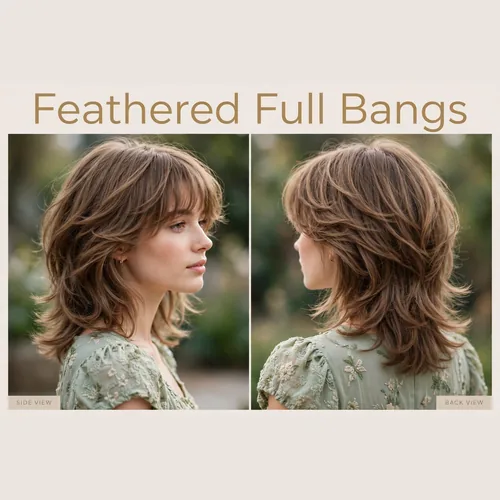
Full bangs do not have to look heavy. Feathered ends keep them light.
Full bangs with feathered ends look soft, not heavy. Ask for point-cutting so the edge stays light.
20. Cheekbone Blended Bangs
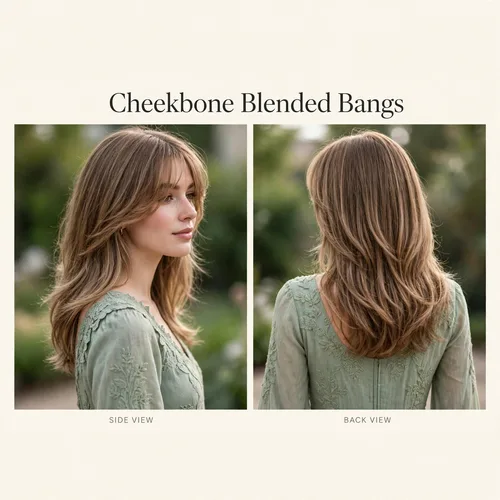
Long blended bangs are the softest option. They start at the cheekbones and flow into the layers, so they need almost no styling.
Bangs start at the cheekbones and melt straight into the top layer. Nobody can tell where the bangs end.
21. Blended Bangs for Low Maintenance
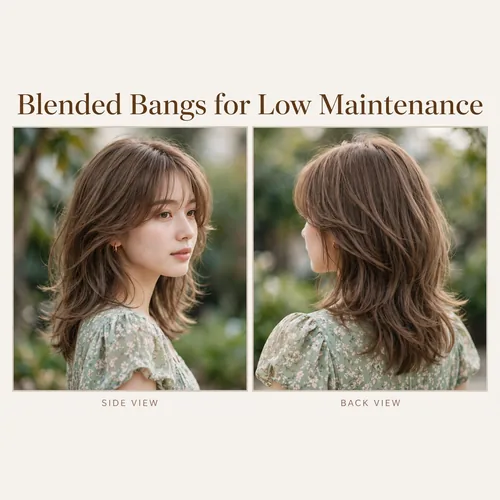
Not every bang needs a morning routine. This one barely needs anything.
Hate styling? These bangs need almost none. They air-dry fine and need a trim only every two months.
22. Blended Bangs on Straight Hair
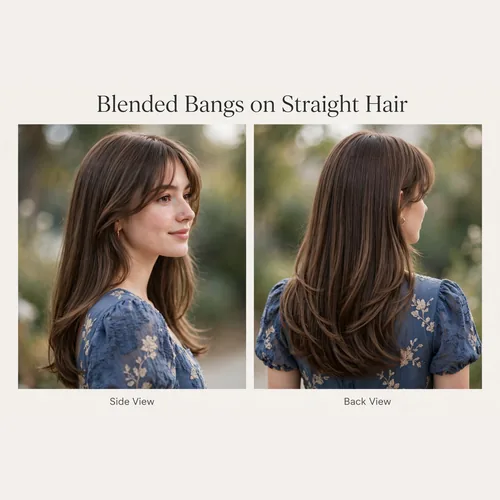
Straight hair shows every hard line a stylist cuts. Blended bangs keep those lines hidden.
Straight hair shows every hard line. Blended bangs keep the line soft so the cut looks smooth, not choppy.
Butterfly Haircut with Bangs: Before and After
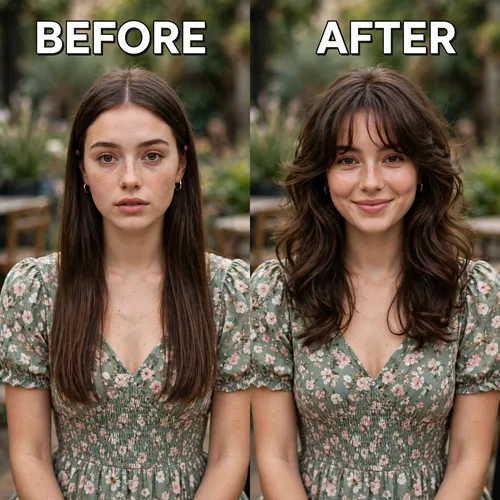
The change is all in the front. Here is what actually changes — and what does not.
Before: your front layers start at the cheekbones or lower. Your forehead is fully open, and the cut’s shape sits mostly at the sides and back. On fine or flat hair, the top can look limp by midday.
After: the bangs add a soft frame at the top of your face. Your eyes and cheekbones stand out more. The front layers look fuller, because the bangs and the short layers now work as one piece. From the side, you see the wing shape clearly. From the back, almost nothing changes — your length and your long layers stay the same.
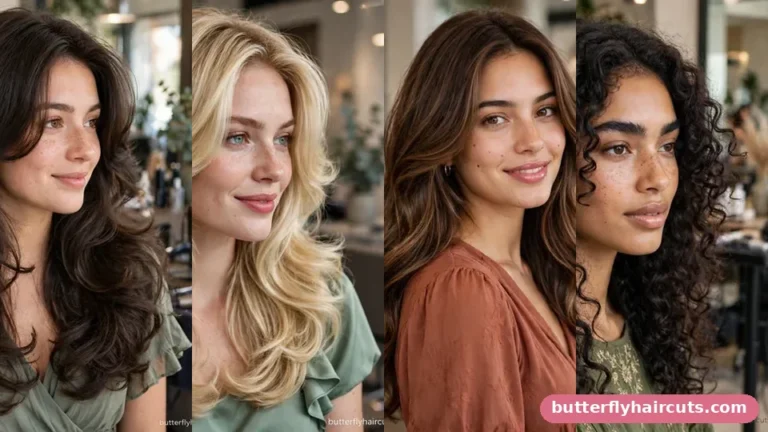
That is the honest trade: a bigger change in the mirror, no change in length. The multi-view photos in this guide show each idea from the side and the back, so you can see exactly what stays and what moves.
What to Tell Your Stylist

Most people get this cut in a salon chair, not at home — cutting bangs that blend into layers takes a trained hand. These exact phrases keep the cut on track. Copy them or show this page to your stylist.
- “I want a butterfly haircut with bangs that blend into the top layer.”
- For curtain bangs: “Start the bangs at my cheekbones and part them in the middle.”
- For wispy bangs: “Keep the bangs thin and light — my hair is fine.”
- For full bangs: “Start the fringe high and let it melt into the layers.”
- Always add: “Thin out the bangs so they don’t look heavy.”
- Always add: “I want the bangs long enough to grow out easily.”
Bring two or three photos of your chosen idea. A photo says more than any haircut term — and it keeps you and your stylist on the same page.
How to Style Your Bangs at Home (10 Minutes)
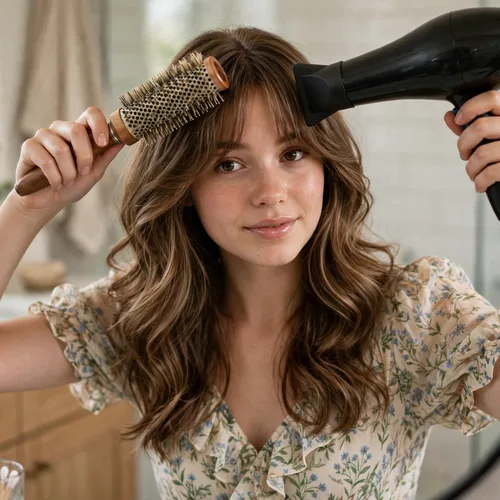
Bangs set fast, so style them first, while the rest of your hair is still damp. These five steps take ten minutes and work for every bang type above.
- Blow-dry the bangs first, while they are still damp. They set fast.
- Use a round brush and roll the bangs away from your face.
- For curtain bangs, split them in the middle and dry each side outward.
- For full bangs, dry them down with a flat brush, then shake them loose.
- Finish with a tiny drop of smoothing serum. Never use heavy oil on bangs — they will look greasy.
Short on time? Dry shampoo on the bangs before bed keeps them from going oily overnight. It buys you a no-wash morning.
Who Should Skip Bangs with a Butterfly Cut
Bangs are not for everyone. Check this list first — if one of these sounds like you, long layers may suit you better.
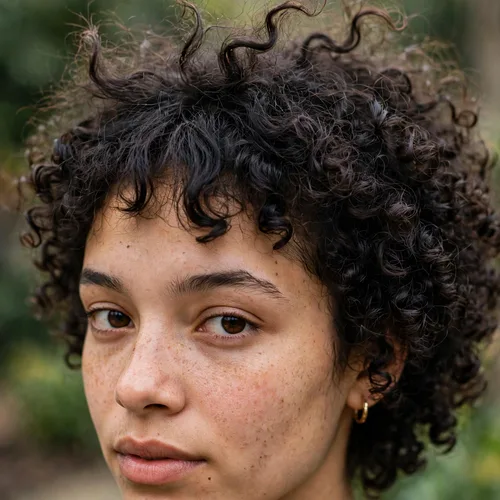
- Very tight curls (3C–4C): bangs shrink and can look uneven. Long blended layers work better.
- Strong cowlicks at the hairline: bangs will stick up. Side-swept can work; straight bangs will not.
- People who hate daily styling: full bangs need a two-minute blow-dry every morning. If that sounds bad, pick long blended bangs or skip bangs.
- Very flat, oily hair: bangs sit on the forehead and pick up oil fast. You may need to wash them daily.
None of this means skipping the cut itself. A butterfly haircut without bangs still gives you the layers and the volume — see the ideas on our homepage.
Growing Out Your Bangs
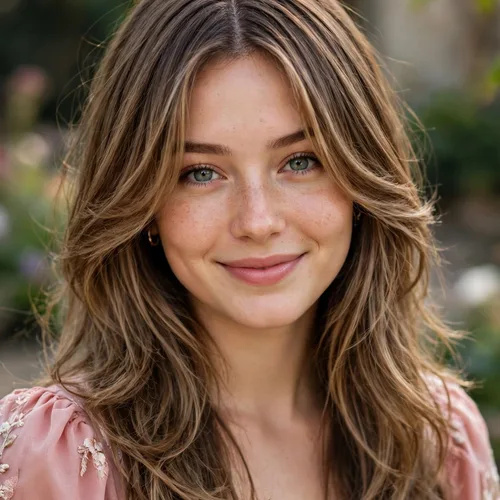
Bangs take about three to four months to reach the cheek. Ask your stylist for a “dusting” trim every six weeks — it keeps the ends neat while they grow. Side and blended bangs grow out the easiest, because they already point sideways into the layers. Full bangs need the most patience. Wear a headband or pin them back in the awkward middle stage — it lasts about three weeks.
Frequently Asked Questions
Can you get a butterfly haircut with bangs?
Yes. The cut’s short top layer blends right into bangs, so they look like they were always part of the style.
Which bangs go best with a butterfly haircut?
Curtain bangs are the safest pick — they melt into the layers. Wispy bangs suit fine hair, side-swept bangs suit square faces, and full bangs suit high foreheads.
Do butterfly bangs work on round faces?
Yes, if they are long and parted in the middle. Short, straight-across bangs make a round face look wider.
Are curtain bangs the same as butterfly bangs?
No. Curtain bangs are shorter and split in the middle. Butterfly bangs start higher and flow into the cut’s layers.
How long do bangs take to grow out?
About three to four months to reach the cheek. Small trims every six weeks keep them neat while they grow.
Can I trim my bangs at home?
Small clean-up trims between salon visits are fine — cut less than you think, and only when the hair is dry. Leave the full reshape to your stylist.
Do bangs need daily styling?
Full bangs do — a quick two-minute blow-dry each morning. Curtain and blended bangs are far more forgiving.
What is the lowest-maintenance bang with a butterfly cut?
Long blended bangs that start at the cheekbones. They air-dry well and need a trim only every two months.